The Soul Cut #08
by Etienne Delbiaggio | October 27th, 2025
During a workshop led by Jacopo Quadri as part of the L’immagine e la parola section of the Locarno Film Festival 2019, the editor showed the audience a strip of film, explaining how, since the very beginning of his career, he had been fascinated by the idea that film stock could be considered the only tangible instrument to measure time.
On that strip were twenty-five frames per second — physical fragments that could be cut and joined together, thus manipulating the temporal space contained within them.
With the evolution of both technique and thought surrounding film editing, temporal ellipsis has gained great importance as a narrative device — a powerful tool for shaping rhythm and the dramaturgy of a film.
Let’s begin by looking at the famous sequence from High Noon (1952).
Feeling the time
The story follows Will Kane, the marshal of a small New Mexico town who, on the day of his wedding and retirement, discovers that Frank Miller, a criminal he once sent to prison, has been released and is returning with his gang to seek revenge.
As the clock ticks toward noon — the hour of the duel — Kane seeks help from the townspeople, but everyone turns away. Left completely alone, he faces his moral choice: to flee or to stay.
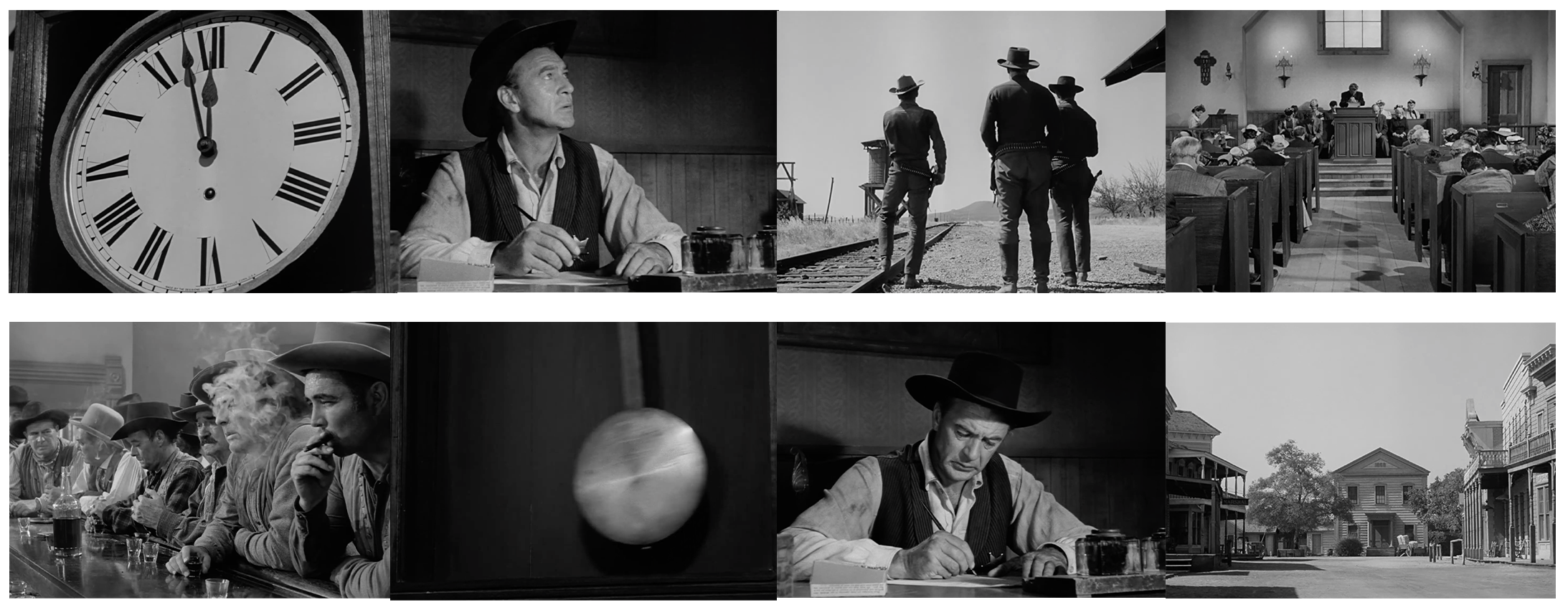
Among the most emblematic moments of the film is the sequence in which Kane writes his will, a scene that perfectly embodies the compression of time and destiny.
Seated at his desk, his pen hesitates, his eyes shifting uneasily toward the clock — every gesture marked by a near-sacred silence. The editing alternates between Kane’s face, the advancing clock hands, and the now-empty town streets.
Here, time is no longer merely narrative — it becomes a physical presence, an invisible enemy moving inexorably forward.
In writing his will, Kane isn’t only preparing for a possible death, but accepting his own isolation. It is the moment when the hero is stripped of everything — authority, love, support — left alone with time and his own conscience.
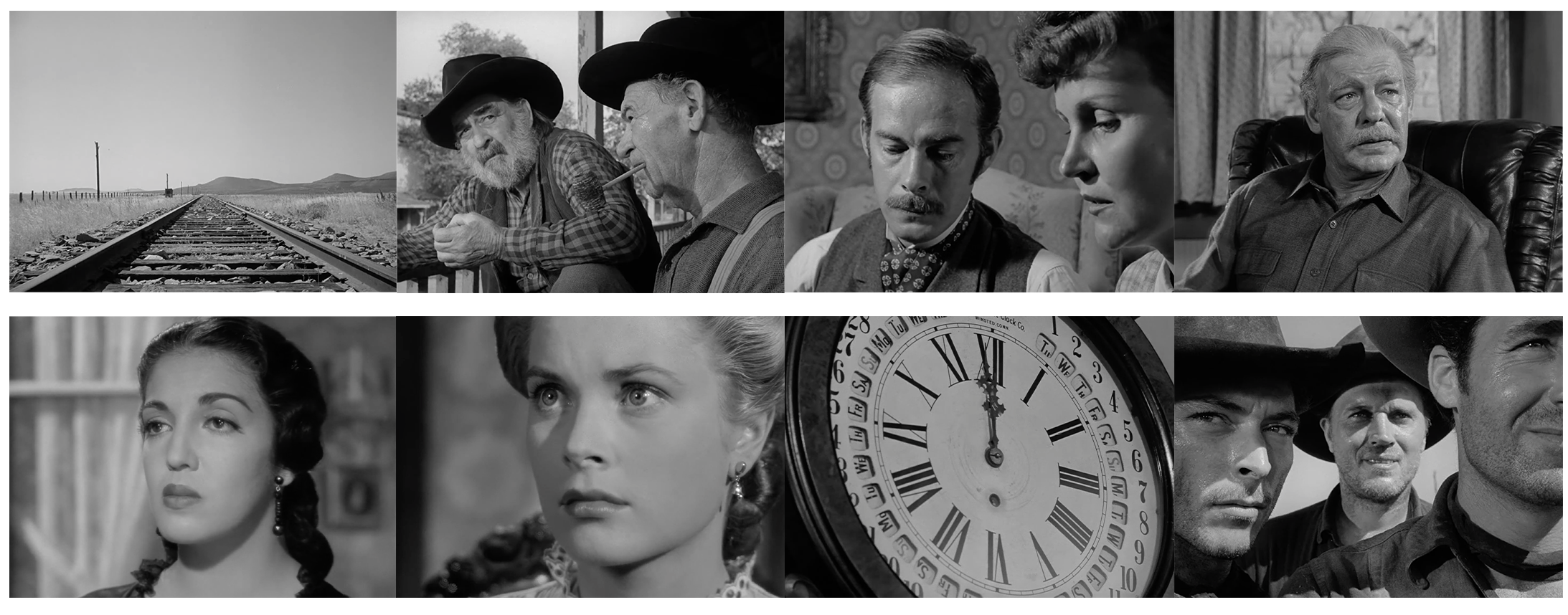
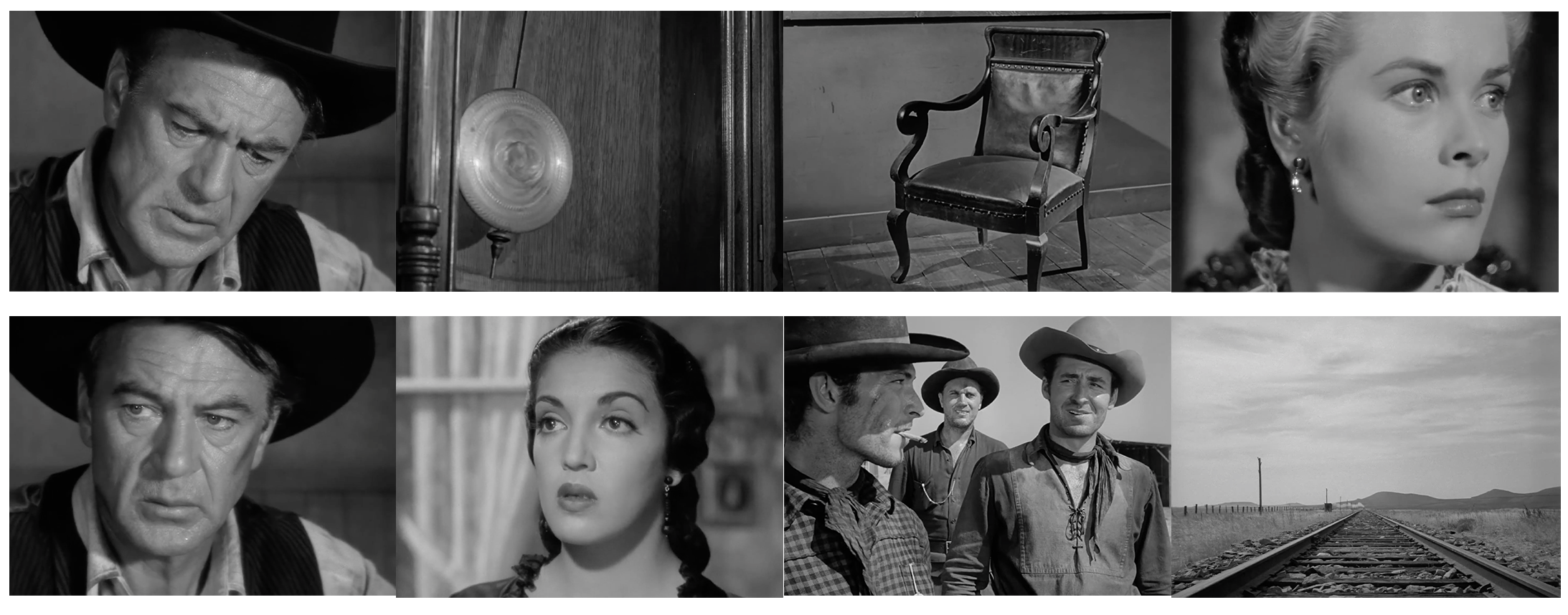
Using the technique of cross-cutting (different characters and locations sharing the same temporal space), the film alternates between these parallel situations, all synchronized by the steady ticking of the pendulum clock in Kane’s office. The soundtrack, too, gradually increases in pace and intensity as noon approaches.
At this point in the film, we’ve seen the various characters that populate this world and learned the choices each has made. In this sequence, they all confront their own conscience and the consequences that await them.
From our perspective as viewers, the brain naturally accepts this narrative form — one that allows us to witness multiple situations in “real time” — because it echoes a familiar mental process: when we wonder or imagine what someone else might be doing while not being with us in the same room.
Another key aspect is that this type of editing builds toward a final catharsis, expressed through the different emotional states struck at the chime of noon: Kane’s resignation, his wife’s anxiety, the townspeople’s apprehension, and the gang’s exhilaration as they see Frank Miller’s train appear on the horizon.
When a film establishes a certain rhythm and style that do not reflect reality — through rapid cuts, stylized pacing, or extra-diegetic music — the audience is willing to accept the manipulation of space and time.
Ellipsis works precisely because it invites the viewer’s intelligence, relying on their ability to interpret the information contained within a cut — to mentally fill the gap of time that passes between one shot and the next.
The perception of time’s passage often depends on the juxtaposition of settings, actions, or characters that share something in common — or, conversely, stand in total contrast.
This is particularly relevant when a film avoids on-screen titles or captions that indicate time or location.
As Valentina Cicogna, professor of Editing and Narrative Structure (third year), observes, such captions in modern films — unless planned stylistically from the start — are often added during post-production to compensate for temporal connections that, due to missing material, fail to provide the audience with sufficient information on their own.
An example of elliptical editing within the same environment can be found in Citizen Kane (1941, Orson Welles).

After establishing the space through a wide shot, a series of shot/reverse shots, changing dialogue tones (from affection to silence), variations in costumes, and transitions all help the viewer understand that the same setting is shown across different moments in time.
In the past, one of the most common techniques was the use of the dissolve.
A classic example appears in The Hustler (1961, Robert Rossen), where long dissolves combined with shots of a clock showing different times make the viewer feel the passing of time during endless pool games — functioning as a summary of the unfolding events.
But dissolves also achieved a kind of intellectual correlation between two images.
In Scanners (1981, David Cronenberg), the story of people born with telepathic powers, a dissolve reveals that while the antagonist is physically in one place, his mind is controlling another person from afar.

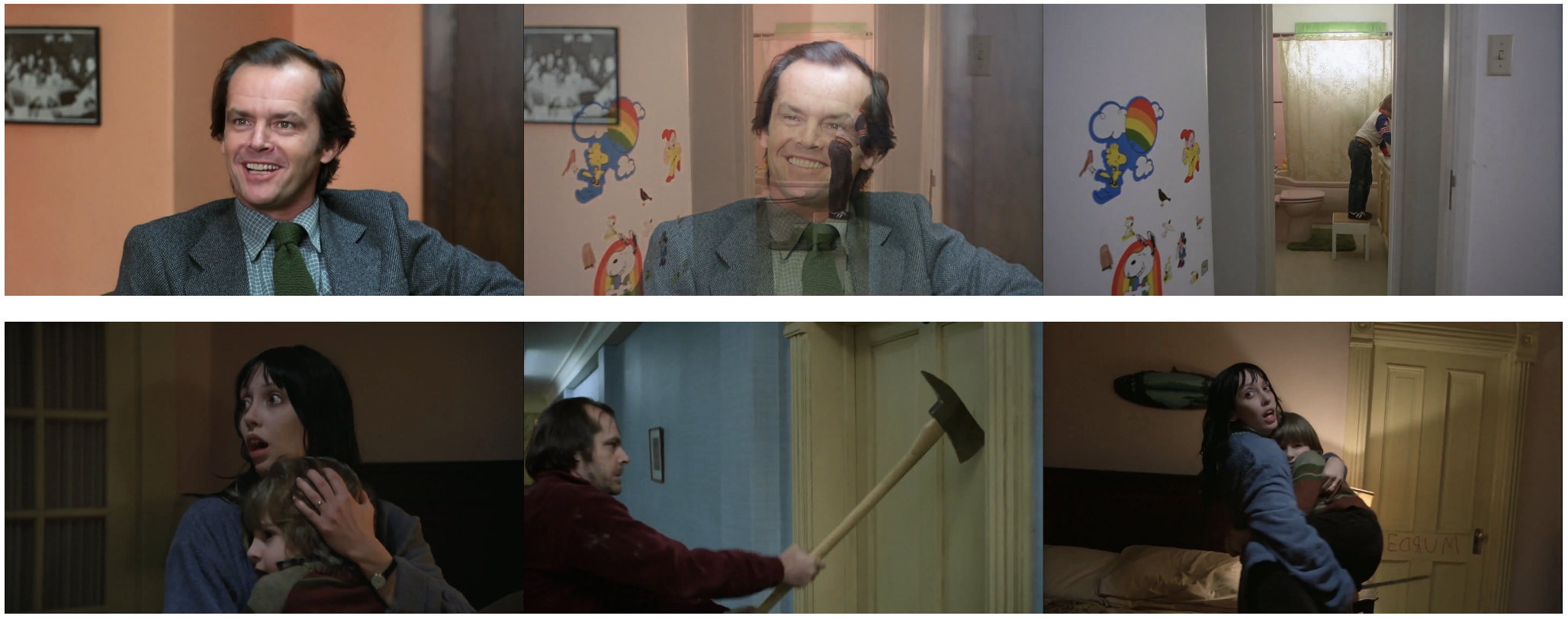
Similarly, in The Shining (1980, Stanley Kubrick), dissolves take on a dual meaning: they not only stretch time, evoking the slow passage of days leading the father toward madness, but also reveal the psychic power of the child, who senses the outcome of a distant job interview.
What initially seems like two separate temporalities is later revealed — through the child’s awareness — to share the same time frame.
Notably, once the father has completely descended into madness, the dissolves disappear, replaced by hard cuts that convey actions in real time, amplifying their violence and immediacy.
Yet even a direct cut can suggest temporal ellipsis — as in Lost Highway (1997, David Lynch).
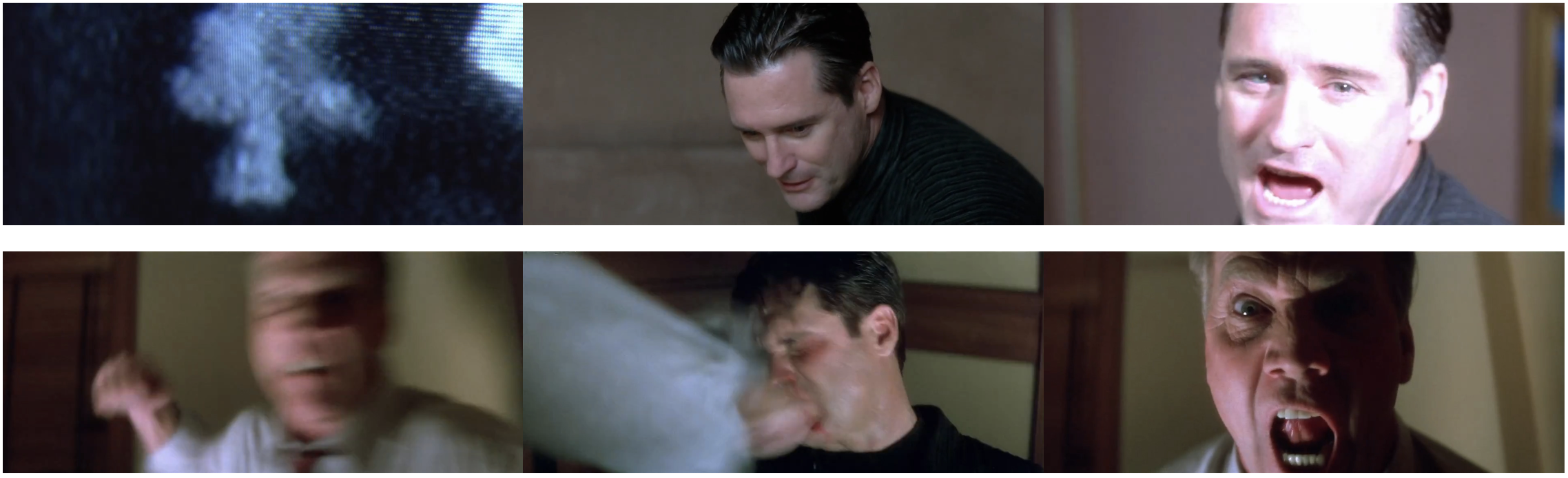
After receiving a videotape showing himself killing his wife, the protagonist, unaware of her death, panics and calls out to her. Suddenly, a sharp cut shows a detective (seen earlier in the film) striking his face and calling him a murderer.
This abrupt transition mirrors the film’s psychological core — the story of a man dissatisfied with his life, haunted by memory lapses. As he questions whether his wife truly died as shown in the tape, the blow from the detective delivers the harsh truth.
The ellipsis also reflects the protagonist’s fractured perception of time — his mind experiencing events out of order.
These are just a few of the many examples showing how the alteration of space and time shapes a film’s rhythm — and how such manipulations are accepted by the audience when they are given narrative anchors to hold onto.
CREDITS:
High Noon (Fred Zinnemann, United Artists, 1952)
Citizen Kane (Orson Welles, RKO Radio Pictures, Mercury Productions, 1941)
Scanners (David Cronenberg, Filmplan International, 1981)
The Shining (Stanley Kubrick, Warner Bros., Hawk Films, Peregrine Productions, The Producer Circle Company, 1980)
Lost Highway (David Lynch, CiBy 2000, Asymmetrical Productions, 1997)



My name is Etienne Del Biaggio. I am a film editor, self-taught animator, and composer of original soundtracks based in Giubiasco (Ticino, Switzerland). After graduating in editing and video post-production from CISA in Locarno (2019), I collaborated with Béla Tarr on Alma by Dino Longo Sabanovic, presented at the Locarno Film Festival. From 2022 to 2023, I worked as lead editor at Fiumi Studios, producing documentaries and corporate videos for clients such as Siemens and EOC Ticino.
Alongside editing and music, I have developed skills in graphic design and animation, creating several animated short films. Beyond these passions, I also enjoy sharing my personal reflections on film editing through my blog The Soul Cut, with the hope of inspiring others to explore the subject.