The Soul Cut #06
by Etienne Delbiaggio | October 8th, 2025
From the very beginning of my training at CISA, I was taught (respectively by the photography teachers Giacomo Devecchi and Riccardo Brunner) to respect certain compositional rules that help the viewer follow continuity and avoid unnecessary distractions that might interrupt the flow of the story.
One of the first fundamental rules was to respect the line of sight, as shown in the example on the side.
Subverting with a meaning
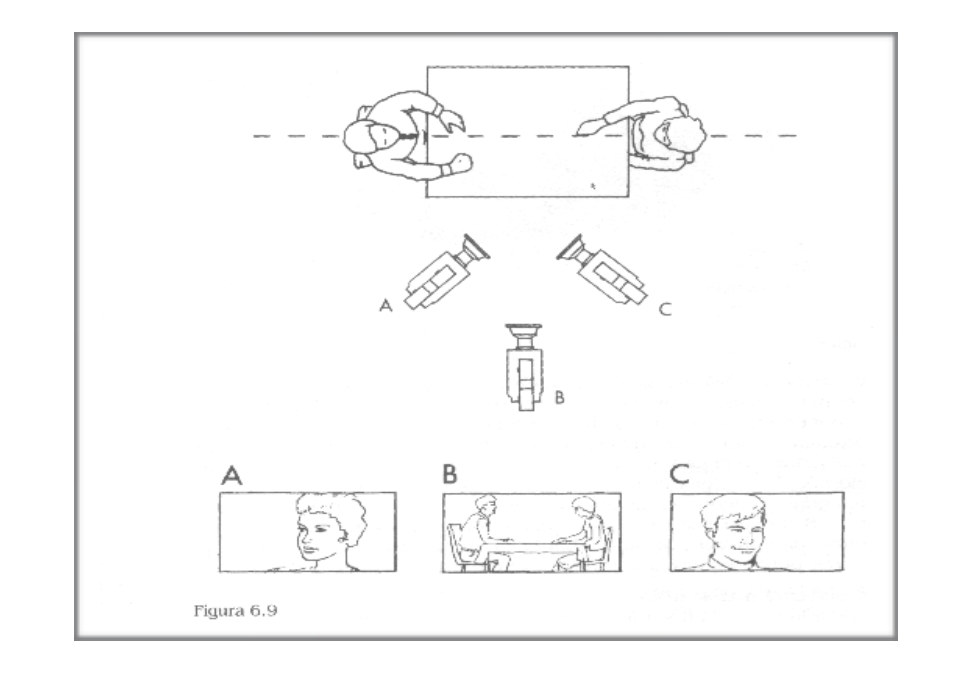
The gaze determines the axis to be respected, because our eyes naturally turn toward the point or person that attracts our interest. Respecting this axis helps create a smooth and natural shot/reverse shot sequence.
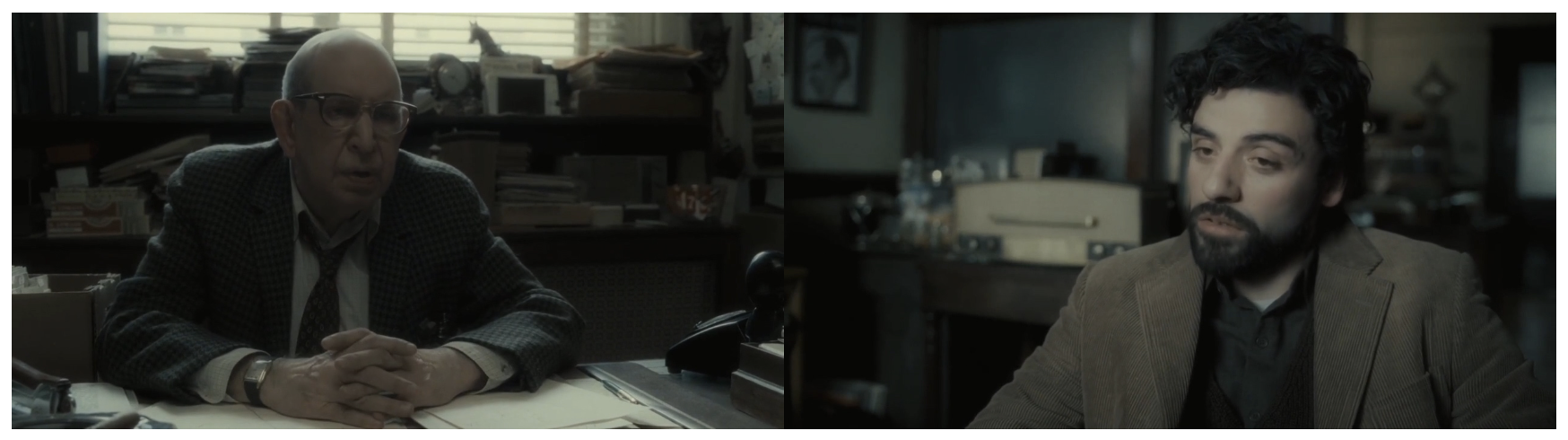
During Devecchi’s lessons in the first year, we were shown how the axis can change its trajectory depending on the direction of the gazes, thus creating new possibilities for connections and movements.
A man at a desk stands up, enters the frame where the interlocutor is, and returns holding a coat. But this time, instead of sitting back behind the desk, he stops between it and the other character. A new axis has been created, as the starting positions have changed due to the movements and new placements of the characters.
Sometimes, however, we encounter works that deliberately break these established rules, with the aim of amplifying the emotion or concept expressed. Let’s take as an example the crossing of the line (axis crossing).

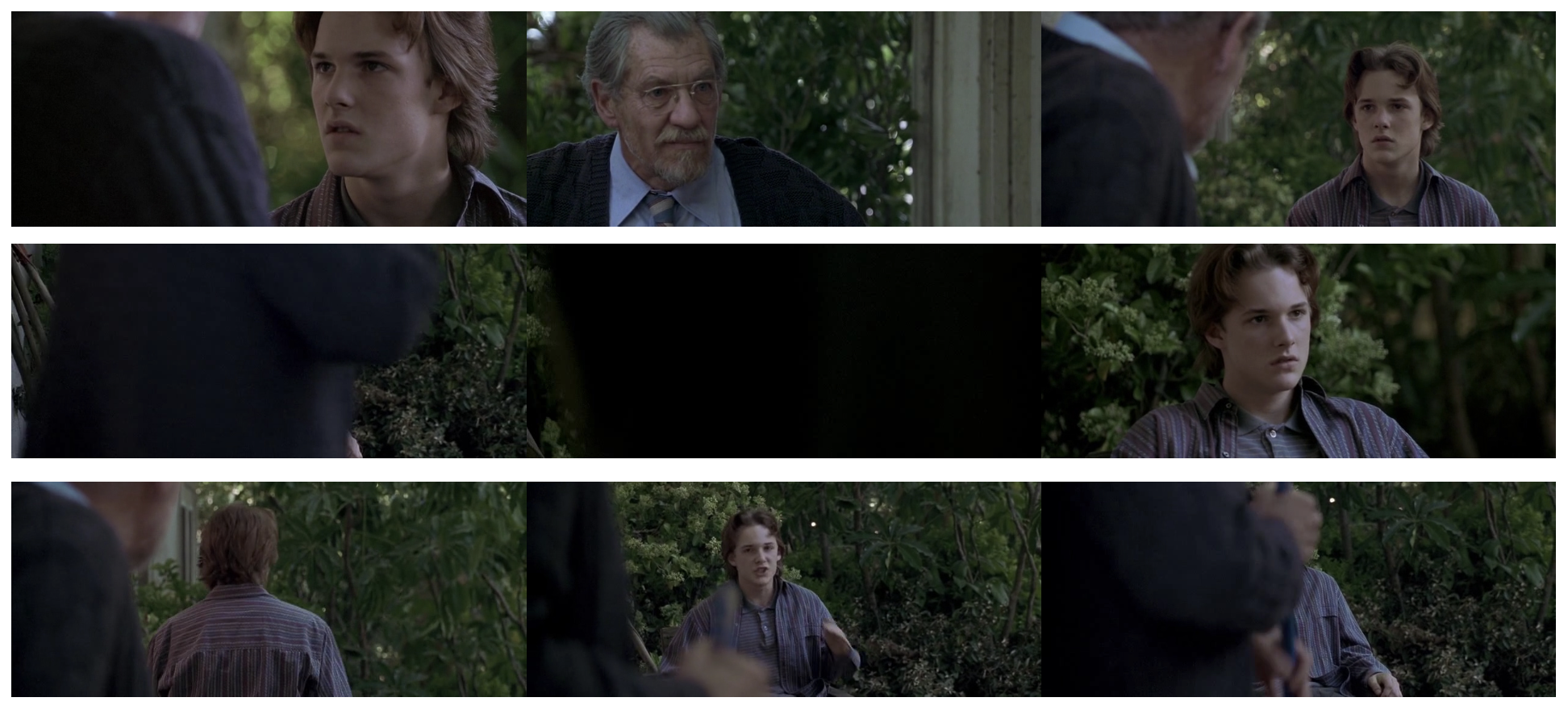
As can be seen, in the first three shots the axis is respected to create a classical shot/reverse shot continuity. In the following four shots, there are no cuts, and we follow the boy sitting down while the old man’s body blocks the frame, hiding the cut that takes us to the other side of the axis.
Two elements make this cut acceptable to the human eye: The blocking of the camera by the actor (a technique experimented by Alfred Hitchcock in Rope to create the illusion of a continuous long take), which “hides” the cut and connects the two spaces through the continuity of action. This shows how technique can make fluid a transition that would otherwise feel impossible to our perception — jumping to a different spatial position in the blink of an eye.
Let’s now look at a rearrangement of the previous sequence of shots:
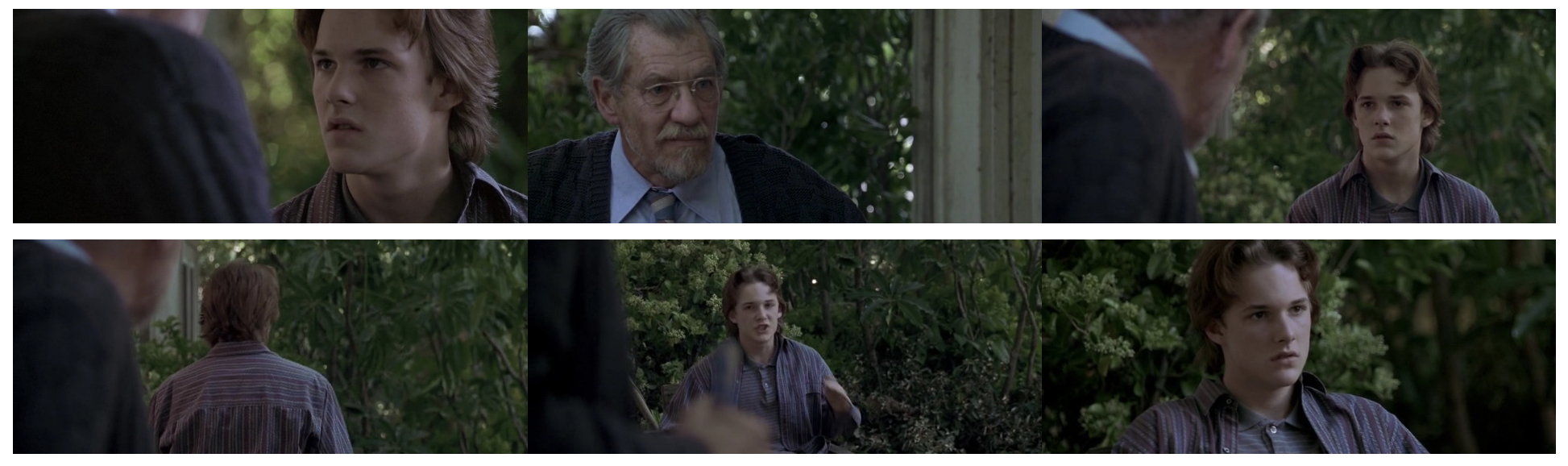
Suppose we are editing this film and only have these exact shots available, without the possibility of finding other material to connect them differently. It’s clear that the last shot feels off compared to the sequence before it. One possible approach concerns sound: the old man’s voice could continue over the last shot, where he doesn’t necessarily need to appear, focusing instead on the boy’s reaction. This creates a sound bridge known as an L cut (so called because the audio of the previous shot continues into the next).
This is a technical solution that would make the transition smoother and less abrupt. However, if we focus only on the technical aspect, we forget a crucial element discussed earlier — the second factor that makes a line crossing acceptable: emotion.
In Walter Murch’s “Rule of Six”, emotion comes first, story second, and technique follows.
If our primary goal is to evoke a reaction in the viewer, we must look at the second point: what story is the film telling, and what is this scene trying to convey?
The film tells the story of a brilliant middle school student obsessed with the Holocaust. Through his private research, he discovers that a former Nazi officer is still alive, living under a false identity nearby. The student blackmails the old man into revealing the gruesome details of his past, in exchange for silence. Soon, the boy’s nightmares and the horror of what he learns begin to haunt him, affecting his school performance.
At this point comes a confrontation where their roles reverse: from being the victim of blackmail, the old man becomes the blackmailer, threatening the boy to improve his grades or risk being implicated for not denouncing a war criminal.
This inversion of power is already emphasized in the plot, enhanced by the direction (notice how, as the boy loses control, he sits down — a posture of defeat and inferiority) and by the editing, which serves the emotion. The collaboration between these elements makes the cut acceptable to the viewer, who consciously or subconsciously perceives the choice as a reinforcement of the power shift and the boy’s growing frustration at losing dominance.
Another element that editing can freely subvert is time and space.
A classic example is the parallel editing in Midnight Cowboy by John Schlesinger (1926–2003), alternating the protagonist’s journey with his childhood memories, revealing clues to his later decision to become a gigolo.
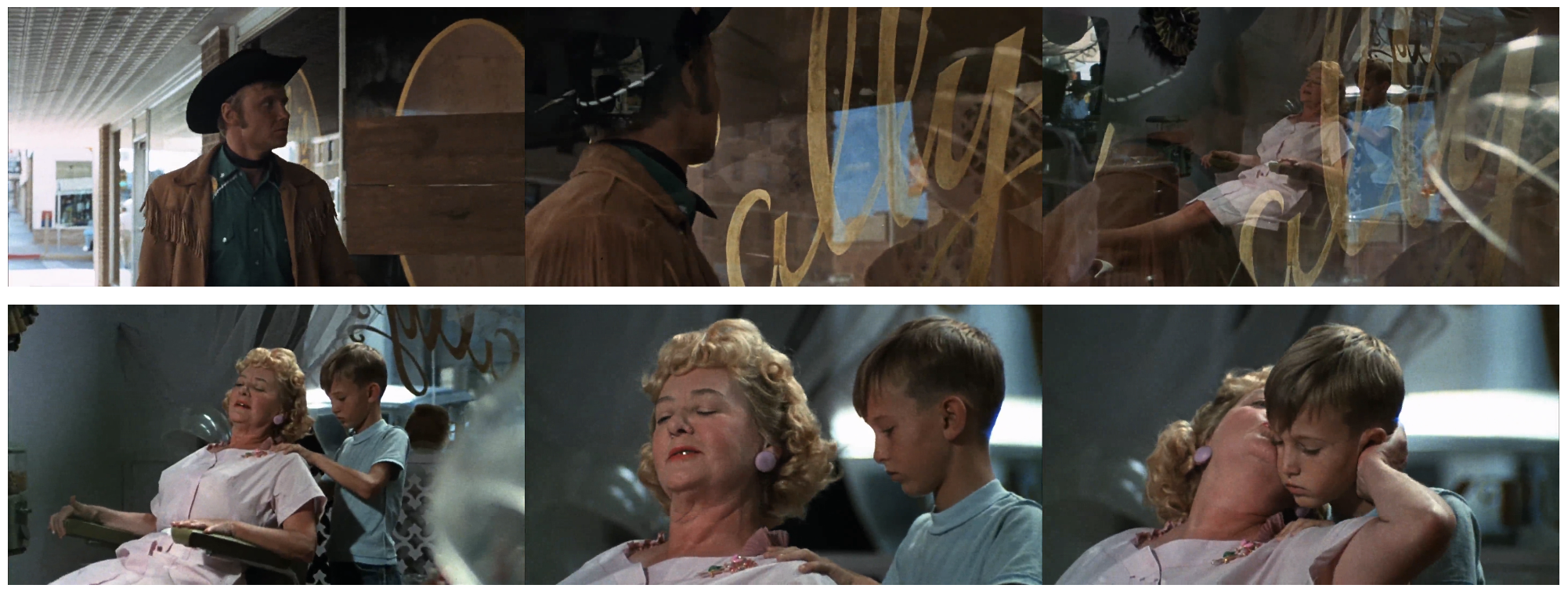
The alternation between the adult and the child versions of the same character is accepted by the audience because it triggers the mechanism of memory, emphasized by the dissolve that begins on the character’s hat, connecting visually to the head — and thus to thought and recollection.
A more destabilizing use of time occurs in Don’t Look Now by Nicolas Roeg (1928–2018). Through parallel editing that alternates a love scene with the couple getting ready to go out later that evening, Roeg combines two actions and spaces that normally couldn’t coexist — since they involve the same characters at different moments just hours apart.
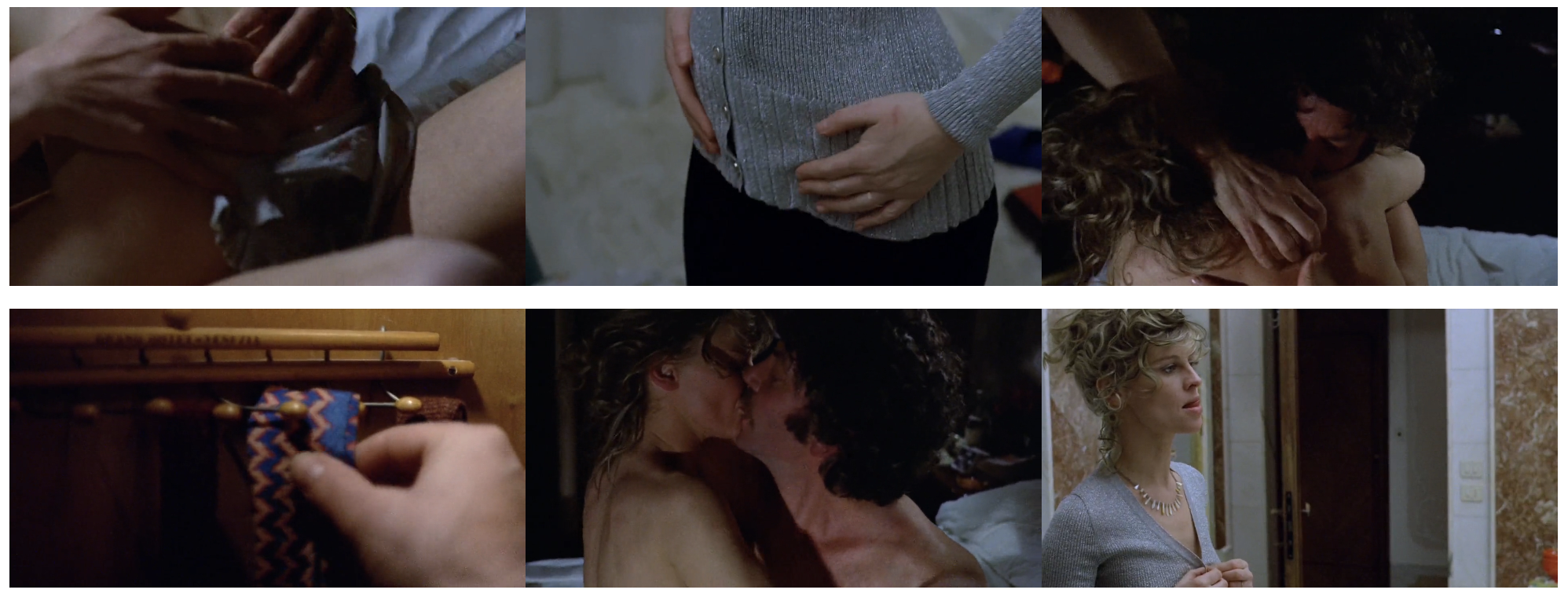
This subversion of natural temporal order grabs the viewer’s attention, taking them by surprise, while exercising an artistic freedom that reflects the director’s vision.
The mirrored gestures — the man’s hands on the woman’s hips mirrored by hers adjusting her dress, or the identical positioning in the last frames — help the viewer follow a certain logic in the sequence. This creates both connection and tension, leading to the desired release when the couple finally goes out into the city at night.
Moreover, this operation serves as a temporal synthesis, freeing the audience from real-time perception and offering a broader, more global perspective. The two combined scenes achieve a stronger dynamic and emotional impact than they would separately.
CREDITS:
Inside Llewyn Davis – Joel & Ethan Coen, StudioCanal, Anton Capital Entertainment, Mike Zoss Productions, Scott Rudin Productions (2013)
Apt Pupil – Bryan Singer, TriStar Pictures, Phoenix Pictures, Bad Hat Harry Productions (1998)
Midnight Cowboy – John Schlesinger, Jerome Hellman Productions (1969)
Don’t Look Now – Nicolas Roeg, British Lion Films, Casey Productions, Eldorado Films (1973)



My name is Etienne Del Biaggio. I am a film editor, self-taught animator, and composer of original soundtracks based in Giubiasco (Ticino, Switzerland). After graduating in editing and video post-production from CISA in Locarno (2019), I collaborated with Béla Tarr on Alma by Dino Longo Sabanovic, presented at the Locarno Film Festival. From 2022 to 2023, I worked as lead editor at Fiumi Studios, producing documentaries and corporate videos for clients such as Siemens and EOC Ticino.
Alongside editing and music, I have developed skills in graphic design and animation, creating several animated short films. Beyond these passions, I also enjoy sharing my personal reflections on film editing through my blog The Soul Cut, with the hope of inspiring others to explore the subject.